
Free Resource
What Is Included in AI Video Production Services?
The line items a scope should name, the ones it usually leaves out, and the questions that reveal which is which.
Planning guide Written by the studio from its own practice; where it states a view, the view is the studio's. It cites no third-party research and attributes no performance figures to the studio.
See cinematic brand films and commercials the studio has made
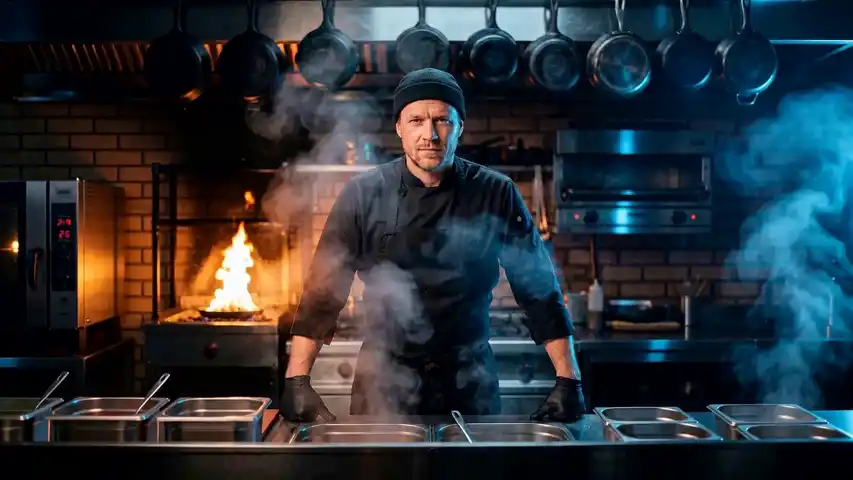
Burger Build Wide · 15s



Two quotes for "an AI video" can describe very different things: one is a subscription to software, the other is a studio taking responsibility for a finished film. The phrase covers both, and a buyer comparing them is comparing a tool to a service. This guide lists what a managed AI video production service includes when it is doing its job, what is usually excluded or priced separately, how to read a scope so the two quotes become comparable, and the questions that expose the difference before anything is signed. It describes how Unreal Media Group scopes its own work and says where a studio's answer should be checked rather than assumed.
What's included
- A service includes the thinking and the finishing, not only the generation
- Read every proposal against the same line items before comparing totals
- Media, listings and performance guarantees are never inside a production scope
- Ask for the rights element by element, and for the record the files come with
- Approval points and revision rounds belong in the scope, with a delivery date
The short answer
A managed AI video production service includes the thinking and the finishing, not only the generation in the middle. The concept and the script. Art direction: what the frames must look like and which references they must match. The generation of frames and, more important, their selection. The edit, the voice, the music and the sound. Colour and captions. A version per placement, cut to the ratio and length each one needs. The review rounds, the accuracy check against the product, and a record of the rights in the delivered files. A tool includes the middle step and leaves the rest to the buyer's team.
Line by line
The table below is the checklist. Read a proposal against it and mark each line included, excluded or unclear; an unclear line is a question for the studio, not an assumption.
| Line item | What it covers | Usually included by a studio | Usually separate or excluded |
|---|---|---|---|
| Concept and script | The idea, the argument, the opening, the words | Yes, written by the studio from the brief | A tool: the buyer writes the prompts |
| Art direction | The look, the references the frames must match, the storyboard | Yes, approved before production | Rarely offered by a tool |
| Generation and selection | Making candidate frames and choosing the ones that serve the cut | Yes, with a director selecting | A tool: the buyer generates and judges |
| Edit, voice, music, sound | The cut, narration or dialogue, score, sound design, mix | Yes, as listed in the scope | Licensed music beyond a library, a named voice, a real performer |
| Colour, captions and versions | Grade, caption tracks, one export per placement | Yes, per the placements the scope names | Placements added after approval |
| Accuracy and claims review | Checking product, labels, proportions and on-screen claims against references | Yes, before delivery | Legal review of the claims themselves |
| Revisions | Rounds of changes after the first cut | A stated number of rounds | Changes to the approved concept |
| Rights and disclosure | What the brand may do with the files, and how synthetic elements are disclosed | A rights record delivered with the files | A real person's likeness without a separate agreement |
| Media, listings and campaigns | Running the ads or managing the store | No, at a production studio | Always separate |
What is usually not included
Media buying and campaign management: a production studio makes the creative and hands it to whoever runs the media, and a proposal that bundles both is describing a different kind of company. Licensed music beyond a library track, a named voice or a real performer, each of which carries its own terms. Legal review of the claims a script makes, as opposed to checking that the script only makes approved ones. Physical samples and their shipping, where a product cannot be judged from photographs. Any guarantee that a platform or broadcaster will accept a piece, or that it will perform. Each of these can be in a scope, but each should be a named line, not an assumption.
Rights, and what you can do with the files
The question to ask is not whether the files are yours but what, precisely, the agreement lets the brand do with them: which placements, which territories, for how long, and whether the synthetic elements, the voice and any licensed music carry terms of their own. A studio should answer with the agreement, not with a slogan, and should deliver a rights record alongside the files that says what each element is and how it may be used. Unreal defines usage rights in the engagement agreement and delivers that record with every batch.
Reviews, revisions and approvals
A scope should say where the brand approves: the concept, the look, the first cut, the final. It should say how many revision rounds are included and what counts as a revision rather than a new brief. Unreal's scoped projects include one revision round after the first cut, and the concept and a spec are approved before anything is produced, so a revision is an adjustment to an agreed piece rather than a second attempt at an unagreed one.
How to read a quote
Two proposals are comparable only when they describe the same deliverables, the same rights, the same review and the same placements. Put both against the table above and fill in the blanks before comparing the totals. A low figure that excludes the edit, the versions and the review is a figure for a different product. What moves a price, and how the tiers of buying differ, is set out in the cost guide.
Ten questions to ask before you sign
- Who writes the concept and the script, and who approves them?
- A service that starts from your prompts is a tool. Ask to see the concept before production and to approve it.
- What references will you work from, and who supplies them?
- Product accuracy comes from references. If nobody asks for packaging artwork, dimensions and photographs, nobody is checking against them.
- Who selects the frames, and against what?
- Generation is not the craft; selection is. Ask who chooses and what they are matching to.
- What is checked before delivery?
- Labels, proportions, materials, colour, on-screen claims. Ask for the list, and ask what happens when something fails it.
- Which placements, ratios and lengths does the price cover?
- A master is one deliverable. Each cut for each placement is another. The scope should list them.
- How many revision rounds are included, and what counts as one?
- Ask for the number and the definition, so a change to an approved cut and a change of mind are not the same line.
- What are the rights, element by element?
- The frames, the voice, the music and any performer may carry different terms. Ask for the rights record the files come with.
- How are synthetic elements disclosed?
- A synthetic performer or voice should be disclosed in the files' record and, where a platform requires it, in the piece. Ask how the studio handles it.
- What is the delivery date, and is it in the scope?
- A date in the approved scope is a commitment. A date in a conversation is not.
- What do you not do?
- A studio that answers plainly (no media, no listings, no guarantees of performance) is telling you where its accountability ends, which is the same thing as telling you where it begins.
How Unreal writes it
Every scoped project at Unreal starts with a discovery call and a written scope that names the format mix, the volume, the ratios, the review steps, the rights, a delivery date and a fixed price, approved before any production starts. External costs, such as a licensed track or a real performer, are approved in writing first. The scope is the answer to every question on this page for that engagement; if a line is not in it, it is not included, and that is the point of writing it down.
In practice
The service this guide supports: AI video production.
Frequently asked questions
What does an AI video production service include?
At a managed studio: concept and script, art direction, generation and selection of frames, the edit, voice, music and sound, colour, captions, a version per placement, the review rounds, an accuracy check against the product and a rights record. A tool includes the generation step and leaves the rest to the buyer.
What is usually excluded from AI video production?
Media buying and campaign management, licensed music beyond a library, a named voice or a real performer, legal review of claims, physical samples, and any guarantee of platform acceptance or performance. Each can be scoped, but each should be a named line.
Do I own the video an AI studio makes for me?
Ask what the agreement lets you do with each element rather than whether the files are yours: placements, territories, duration, and the terms carried by any synthetic element, voice or music. A studio should deliver a rights record that answers this for every file.
How do I compare two AI video production quotes?
Put both against the same list of deliverables, rights, review and placements, fill in what each leaves out, and compare only when they describe the same thing. The cost guide on this site explains what moves a price.
Does Unreal include media buying?
No. Unreal is a production studio. It makes the creative and hands the finished files to whoever runs the brand's media, and it never logs in to an ad account.
Start with one scoped batch.
Book a free 15-minute discovery call. We'll map the exact plan for your brand — no pitch deck, no fluff.